
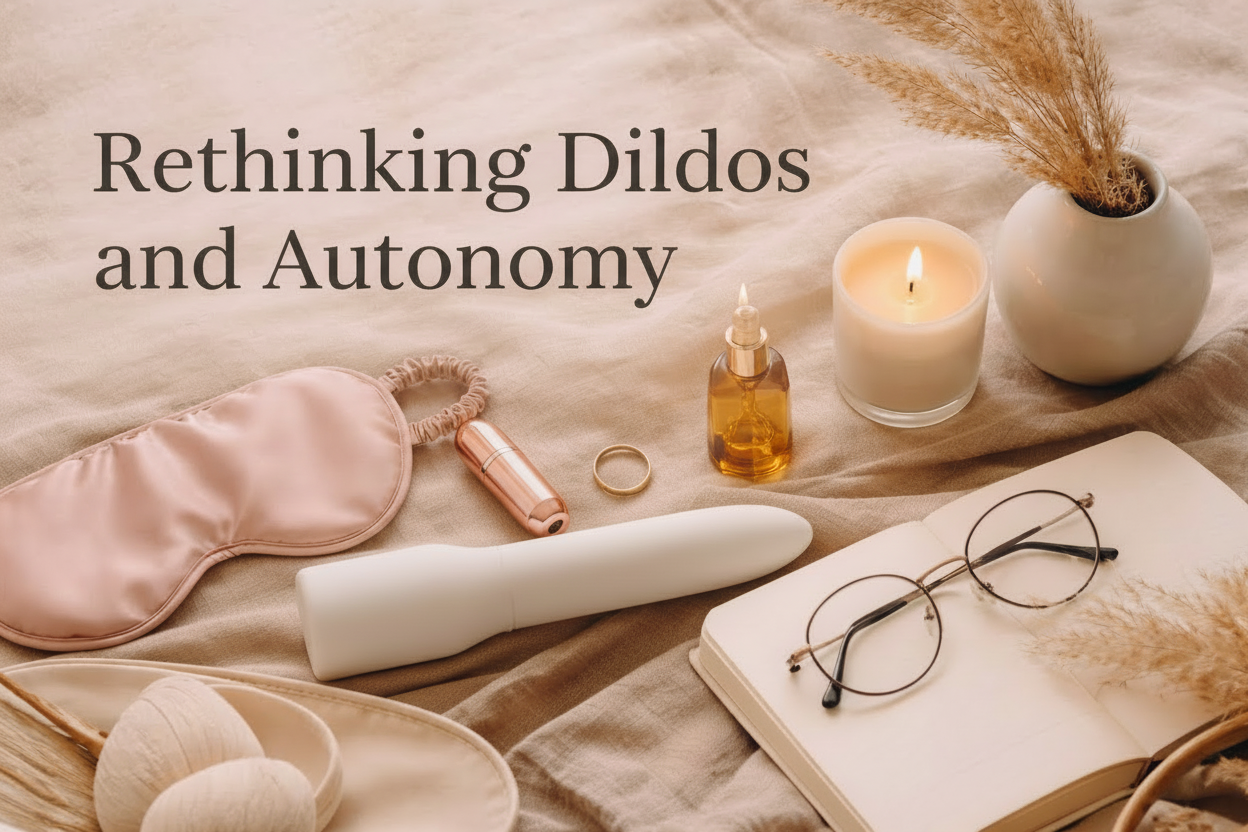
For a long time, conversations about dildos and autonomy were shaped by ideas of performance, comparison, and visibility. Size, intensity, and visual impact often took center stage, quietly suggesting that pleasure should be measured or demonstrated. Today, however, a quieter shift is emerging – one that reframes dildos not as tools of performance, but as private objects of self-direction and choice.
Rethinking dildos and autonomy invites us to move away from external expectations and toward a more internal, embodied understanding of pleasure.
Dildos and Autonomy: Where Performance Falls Away
Performance implies an audience, even when that audience is imaginary. Autonomy begins where that audience disappears.
When pleasure is self-directed, the focus shifts from how it looks to how it feels. Choosing a dildo privately – without explanation or comparison – becomes an act of agency. The object is no longer a statement; it becomes a response to the body’s own language.
In this sense, dildos and autonomy are deeply connected. They meet at the point where personal preference overrides borrowed narratives of what pleasure is “supposed” to be.
Realistic dildos are a good example of this shift. A piece like the Mc Hung Harry Dildo is not inherently about excess or spectacle. For some users, realism provides a grounding sensation – weight, shape, and presence that feels familiar rather than performative. The autonomy lies not in what the object represents socially, but in why it was chosen personally.
Choice Is Not About “More” – It’s About Alignment
A common misconception in sexual wellness is that exploration must always move toward intensity. In reality, autonomy is about alignment: choosing what matches your body, your nervous system, and your current emotional state.
Sometimes that alignment includes curiosity toward layered or complex sensations. Designs that offer dual stimulation are often misunderstood as being about “pushing limits,” when in practice they can be about control and pacing.
The Threesome Double Ecstasy, for instance, can be approached slowly, intentionally, and entirely on one’s own terms. Used privately, without pressure to “handle” it in a certain way, it becomes less about novelty and more about listening – noticing how the body responds to depth, fullness, and coordination.
Autonomy allows complexity without obligation.
Sensation as Information, Not Performance
One of the most important reframes in expert conversations about pleasure is understanding sensation as information. Texture, firmness, vibration, and rhythm all communicate differently with the nervous system.
Vibrating dildos are often marketed as upgrades, but in practice, vibration can be grounding rather than stimulating. Subtle vibration patterns can help regulate arousal, reduce tension, or encourage slower, more mindful engagement.
From personal experience, introducing a moderate, rechargeable option like the Dorcel Real Vibrator S 6” Rechargeable Vibrator shifted my own understanding of solo intimacy. Instead of chasing peak sensation, I began paying attention to how different settings affected breath, focus, and emotional presence. That awareness – not intensity – became the most valuable outcome.
Private Pleasure Objects and Self-Trust
Anthropologists often note that personal objects gain meaning through secrecy and intention. In intimacy, this symbolism becomes especially powerful.
A dildo chosen privately, stored discreetly, and used without explanation represents self-trust. It exists outside validation systems. It does not perform. It simply supports an experience that belongs solely to the person using it.
This is where autonomy becomes embodied – not as a statement, but as a quiet practice.

Redefining Empowerment in Intimate Life
Empowerment is frequently portrayed as visible and declarative. But in intimate contexts, empowerment is often subtle.
It may look like choosing comfort over novelty.
It may mean revisiting the same object over time rather than constantly seeking something new.
It may involve slowing down – or stopping altogether.
Rethinking dildos through autonomy invites a more sustainable, respectful relationship with pleasure. One rooted in consent, curiosity, and self-knowledge rather than performance metrics.
Because pleasure, when it truly belongs to you, doesn’t need to prove anything.